
Foundations
Understanding Cannabis Genetics
Diploid, mostly dioecious and heavily hybridised: the genetic basics that shape every cultivar.
WeedStrains.ca editorial desk · Published · Updated · 8 min read
Key takeaways
- Cannabis is typically dioecious, with separate male and female plants.
- Most commercial flower is grown from female clones or feminised seed.
- Pedigrees in the trade are largely self-reported.
The plant genome
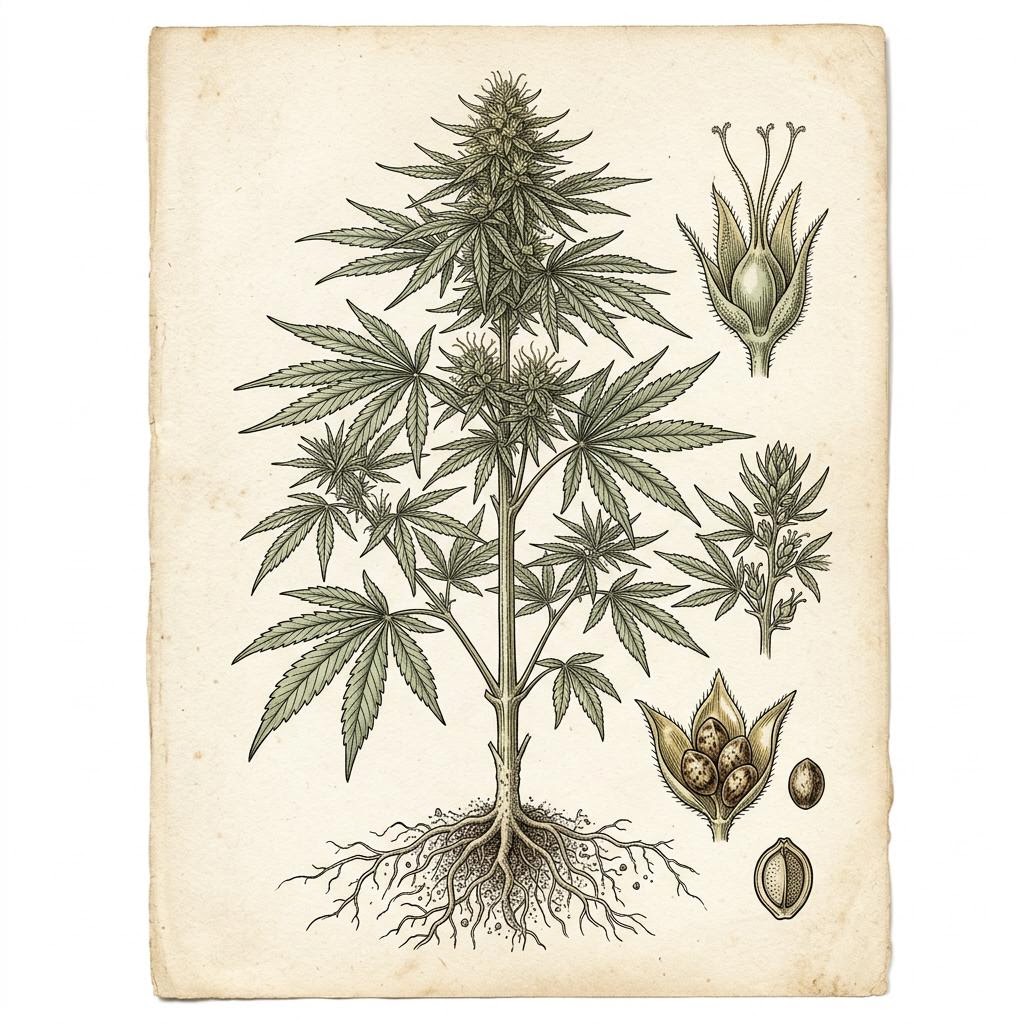
Cannabis is a diploid plant with ten pairs of chromosomes (2n = 20). Females are typically XX and males XY. Commercial production uses unpollinated female plants to maximise flower and resin.
Chemotype genes
Whether a plant produces mainly THCA or CBDA depends largely on the synthase genes it carries. Terpene profiles are shaped by families of terpene synthase genes, which Watts et al. (2021) linked to how products were labelled.
Clones, seeds and phenotypes
A seed is a new genetic individual; a clone is a cutting of an existing one. Two seeds from the same cross can express different phenotypes, which is one reason names drift.
Propagation methods compared
| Method | Genetic identity | Implication |
|---|---|---|
| Clone (cutting) | Identical to mother | Most consistent, if the mother is authentic |
| Regular seed | New combination | Variation between siblings |
| Feminised seed | New combination, female-biased | Still phenotypic variation |
Frequently asked questions
- Can a lineage be verified?
- Only through genetic testing against reference samples, which is rarely published for commercial cultivars.
Evidence
Sources and references
- [01]Large-scale whole-genome resequencing unravels the domestication history of Cannabis sativa
Ren G. et al., Science Advances, 2021
- [02]Cannabis labelling is associated with genetic variation in terpene synthase genes
Watts S. et al., Nature Plants, 2021
- [03]The Genetic Structure of Marijuana and Hemp
Sawler J. et al., PLOS ONE, 2015