
Chemistry
Understanding Cannabis Terpenes
The volatile compounds behind cannabis aroma, and the gap between their chemistry and the claims made about them.
WeedStrains.ca editorial desk · Published · Updated · 8 min read
Key takeaways
- Terpenes are built from five-carbon isoprene units.
- Cannabis produces over a hundred terpenoids, mostly in trichomes.
- Effect claims for terpenes are mostly extrapolated from preclinical research.
Building blocks
Monoterpenes have ten carbon atoms (two isoprene units); sesquiterpenes have fifteen. Both are synthesised in glandular trichomes by terpene synthase enzymes.
Why they vary
Terpenes are volatile. Drying, curing, packaging and storage time all change the profile measured in a finished product.
The entourage hypothesis
Russo (2011) proposed that terpenes and cannabinoids might interact. This remains a hypothesis, with limited supporting human evidence.
Frequently asked questions
- Are terpenes unique to cannabis?
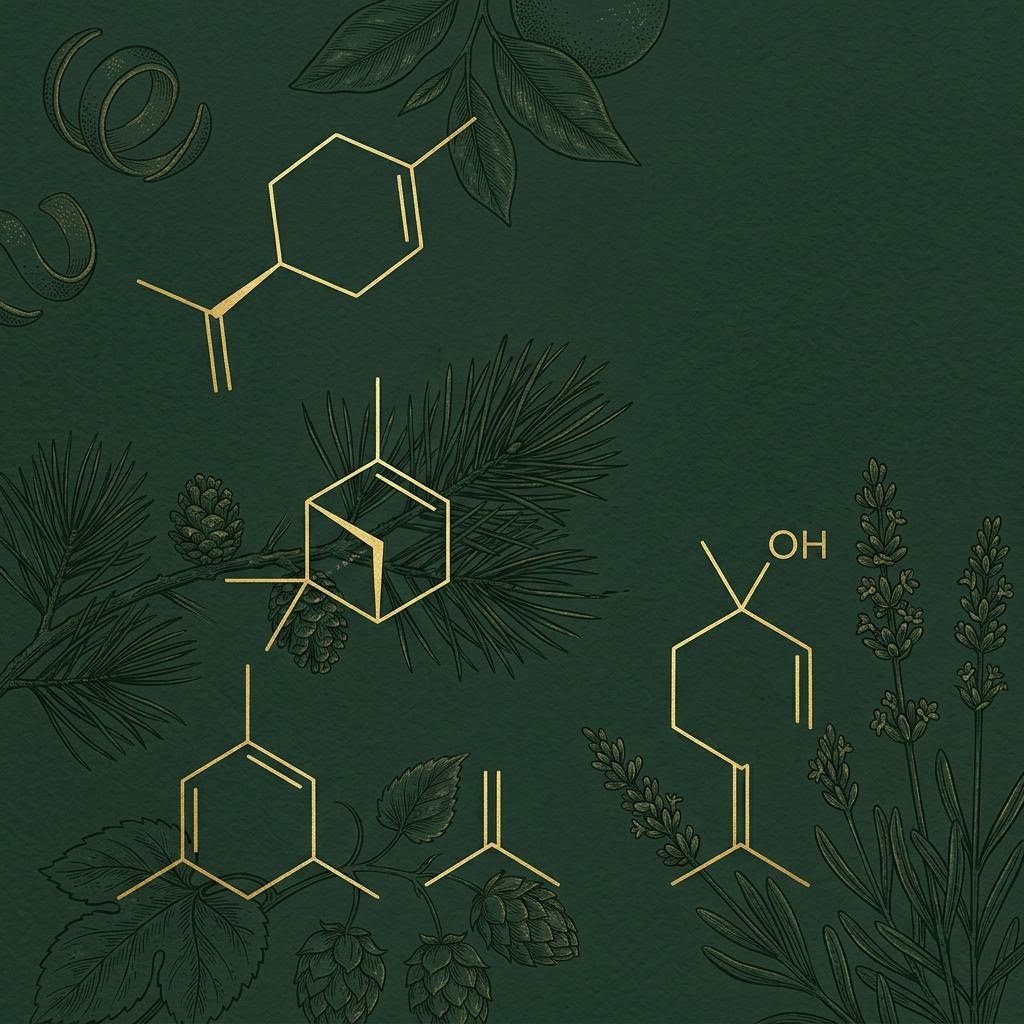
- No. Every major cannabis terpene also occurs in other plants such as hops, citrus, pine and lavender.
Evidence
Sources and references
- [01]Terpenes in Cannabis sativa — From plant genome to humans
Booth J.K., Bohlmann J., Plant Science, 2019
- [02]Taming THC: potential cannabis synergy and phytocannabinoid-terpenoid entourage effects
Russo E.B., British Journal of Pharmacology, 2011
- [03]Cannabis labelling is associated with genetic variation in terpene synthase genes
Watts S. et al., Nature Plants, 2021