
Blue Dream
Also known as: Azure Haze (reported alternate name)
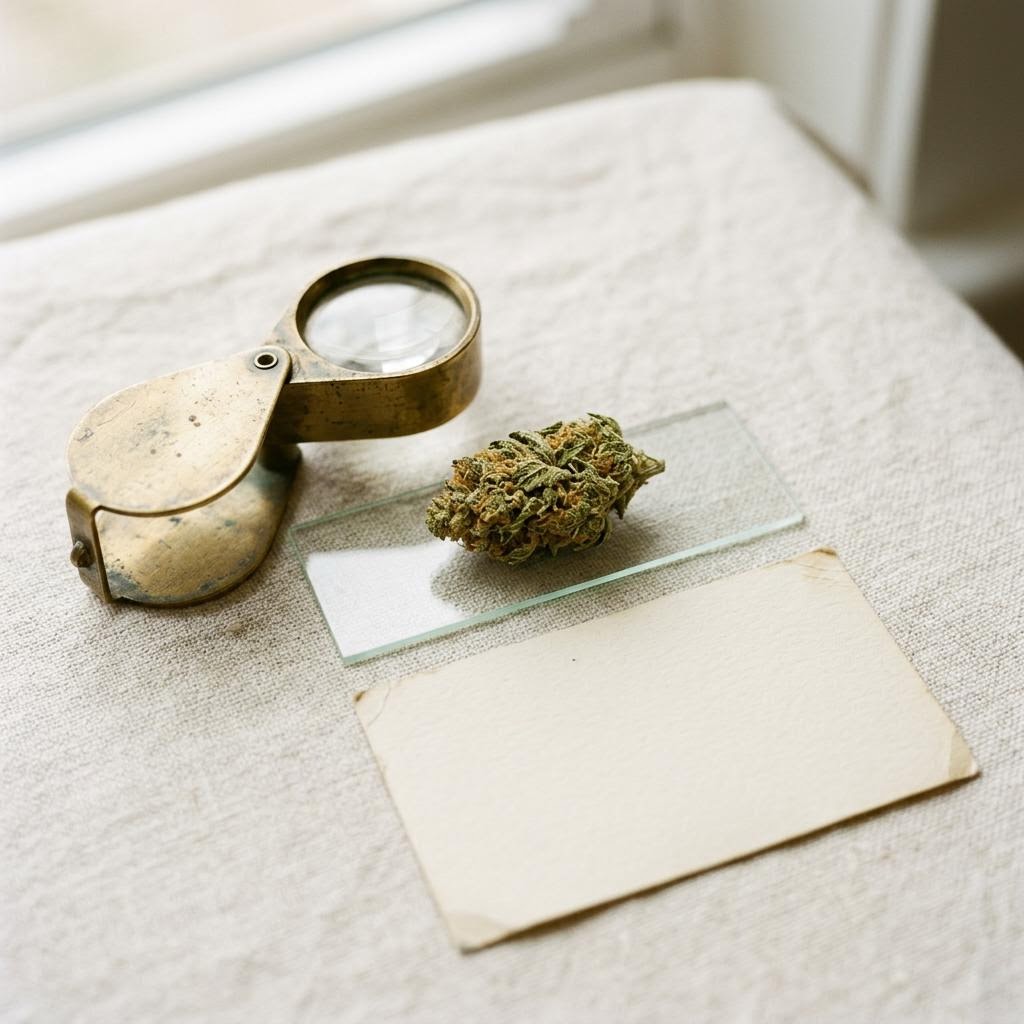
Overview
What is Blue Dream?
Blue Dream is one of the most widely circulated cultivar names in North American cannabis, frequently described in industry literature as a cross between a Blueberry line and a Haze line. It is a useful case study in how a popular name spreads faster than verifiable genetics.
History
History and origins
The name is commonly associated with California in the 2000s. No breeder-published pedigree or seed record has been verified by WeedStrains.ca; the history is drawn from industry convention and should be read as reported rather than documented.
Genetics
Reported genetic lineage
Reported in industry sources. Not confirmed by published genetic testing.
Dashed links indicate reported, not genetically verified, relationships.
Classification
Historical classification: Hybrid
Indica, sativa and hybrid are marketing and historical folk categories in modern cannabis. Genomic studies show they do not reliably predict chemistry or effects. Read the evidence.
Botany
Botanical notes
- Commonly described as a tall-growing hybrid with long flowering periods
- Physical traits vary substantially between commercial clone lines
Chemistry
Documented cannabinoid and terpene composition
Cannabinoids: not documented
No cultivar-level peer-reviewed data located.
Terpenes: not documented
No cultivar-level peer-reviewed data located.
WeedStrains.ca has not located a peer-reviewed, cultivar-specific chemical profile for this name. Retail menus publish batch potency ranges, but those figures describe a specific lot from a specific producer and are not reproduced here as strain facts. Consult the certificate or label on a specific product for batch values.
Variation
Differences between cultivators and batches
Products sold under this name by different licensed producers can come from different seed lines, clones or phenotypes, and are grown, dried and cured under different conditions. Peer-reviewed genetic and chemical surveys have found that samples sharing a strain name are frequently not more similar to each other than to samples with different names. Treat the name as a label, not a chemical specification.
Branded products
Observed retail listings
A branded product is not the same thing as a cultivar. These listings show the name in Canadian commerce; they are citations, not endorsements, and carry no purchasing information.
No Canadian listings recorded in our current sources.
Safety
Health and safety considerations
Effects cannot be predicted from a strain name. Cannabis impairs driving and carries risks described by Health Canada. Safety guidance.
FAQ
Frequently asked questions
- Does every Blue Dream product have the same THC level?
- No. Potency is a property of a specific batch, not of a strain name. Canadian labels list the THC and CBD content of the product in the package.
- Is Blue Dream an indica or a sativa?
- Blue Dream is commonly listed under the classification shown above, but these labels are not reliable predictors of chemistry or effect according to published genetic research.
Evidence
Sources and references
- [01]Genetic tools weed out misconceptions of strain reliability in Cannabis sativa
Schwabe A.L., McGlaughlin M.E., Journal of Cannabis Research, 2019
- [02]The Genetic Structure of Marijuana and Hemp
Sawler J. et al., PLOS ONE, 2015
- [03]Cannabis labelling is associated with genetic variation in terpene synthase genes
Watts S. et al., Nature Plants, 2021
Related profiles
OG Kush
Listed as Hybrid (label, not predictor)
OG Kush is a foundational name in modern cannabis breeding; a large number of contemporary cultivar names claim it as a parent. Its own origin is contested and poorly documented.
White Widow
Listed as Hybrid (label, not predictor)
White Widow is a cultivar name popularised through the Dutch seed trade in the 1990s and is often cited for its visibly dense trichome coverage, the origin of its name.